11 Rare Marine Species Found at Sipadan Island
Beyond the barracuda and turtles, Sipadan holds nudibranchs, sea stars and a copepod that carries the island's own name into science.
World renowned for its clear water and beautiful diving, Sipadan Island lies off the east coast of Sabah, Malaysia, in the heart of the Indo-Pacific biodiversity hotspot. The island's water and unusual reef features are home to thousands of fish and invertebrate species, many of them endemic. With just one glimpse into this underwater world, it's easy to agree with oceanographer Jacques-Yves Cousteau, who described the island as an “untouched piece of art.”
I have seen other places like Sipadan 45 years ago. Now we have found again an untouched piece of art.
Jacques-Yves Cousteau
Green Turtles
A major attraction here is the resident green turtle population, Chelonia mydas. Though endangered, it's not uncommon to see one or two dozen turtles on a single dive. They're so plentiful that researchers regularly come to study the turtles nesting year-round on the island, with nesting activity peaking in December and July.
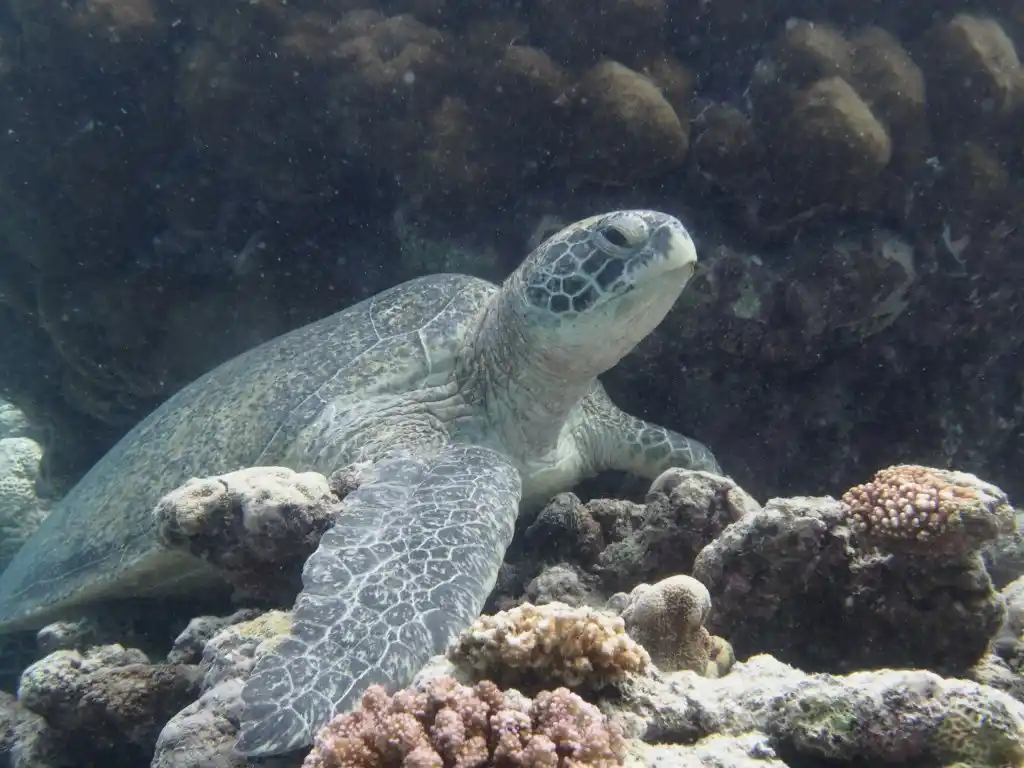
Green turtles are among the largest sea turtle species, weighing up to 320kg and reaching 1.5m in length. Named for the colour of their body fat rather than their skin, their shell is typically brown or olive. They're the only herbivorous sea turtle species, often found grazing seagrass meadows around Sipadan at high tide.
Sea Cucumbers
Thelenota anax: also known as the giant sea cucumber, this species prefers hard ground, large rubble and coral sand patches, typically at 10 to 30m depth. It can reach up to 61cm and is large enough to host various crab and snail species living on its abrasive skin. Its colour ranges from grey to yellowish-grey, covered in irregular patches of tan and red. Around Sipadan, it's only been recorded in the sand and rubble plain at Barracuda Point, and is increasingly targeted by fishers as other stocks decline elsewhere.
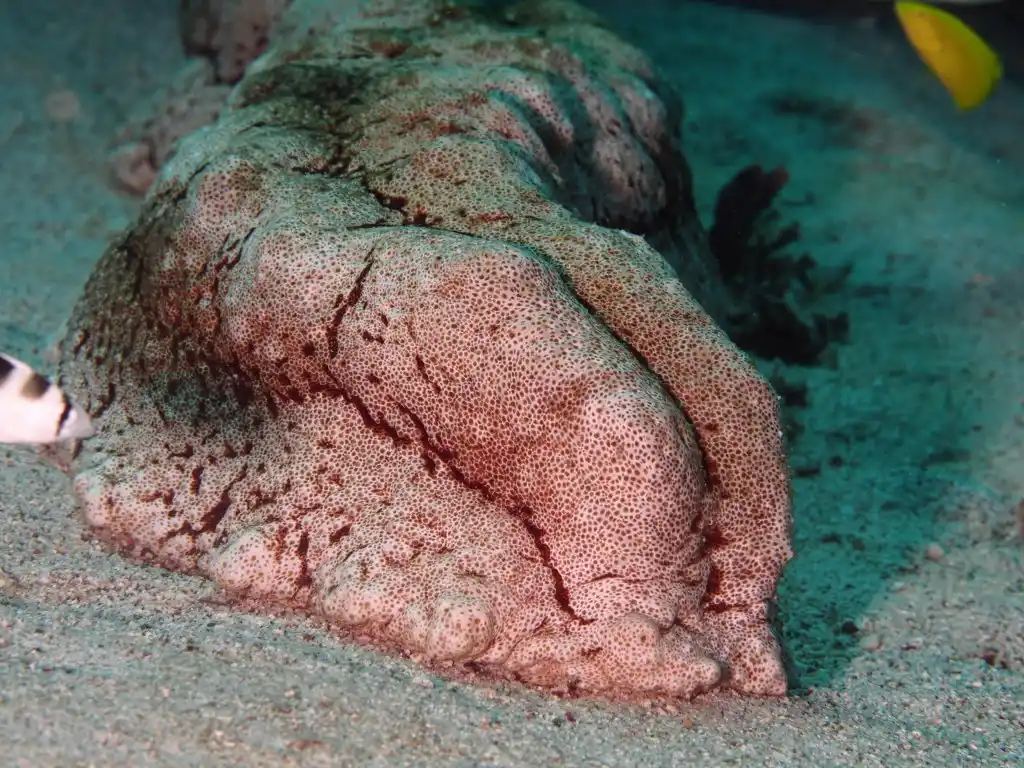
Actinopyga albonigra: typically found in shallow water, its occurrence at Sipadan is a new record for the region. Its pale skin is covered in black-to-brown blotches, which divers have compared to dalmatian sausages. Like all sea cucumbers, it plays an important ecological role in cleaning sand.
Nudibranchs
Glossodoris stellatus: this chromodorid nudibranch is one of several rare species found at Sipadan. Its dark brown or near-black body is covered head to tail in tiny white speckles, which is where its name comes from, Latin for “starry.” Twelve brightly coloured branchial plumes, or gills, sit at the rear. Seeing one is a rare stroke of luck; the only other published record of the species is from Papua New Guinea, where it was first described.
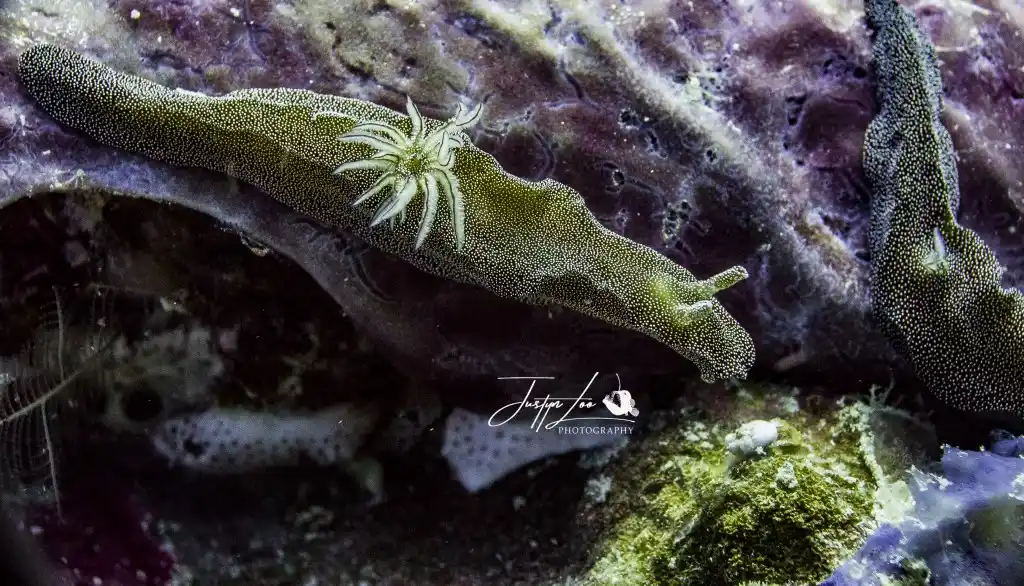
Phyllidiopsis krempfi: one of the larger dorid nudibranch species, typically pink with two broad longitudinal lines running the length of its body, plus several thinner parallel lines and white tubercles resembling tiny popped popcorn kernels. Its head end is marked by black antenna-like rhinophores.
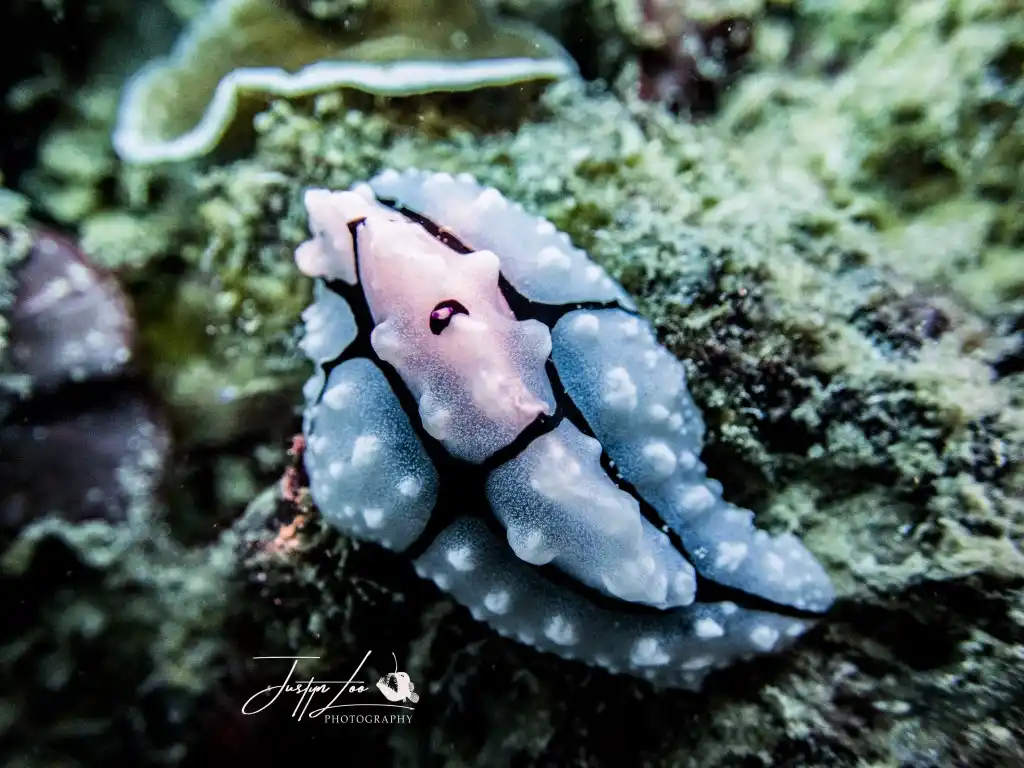
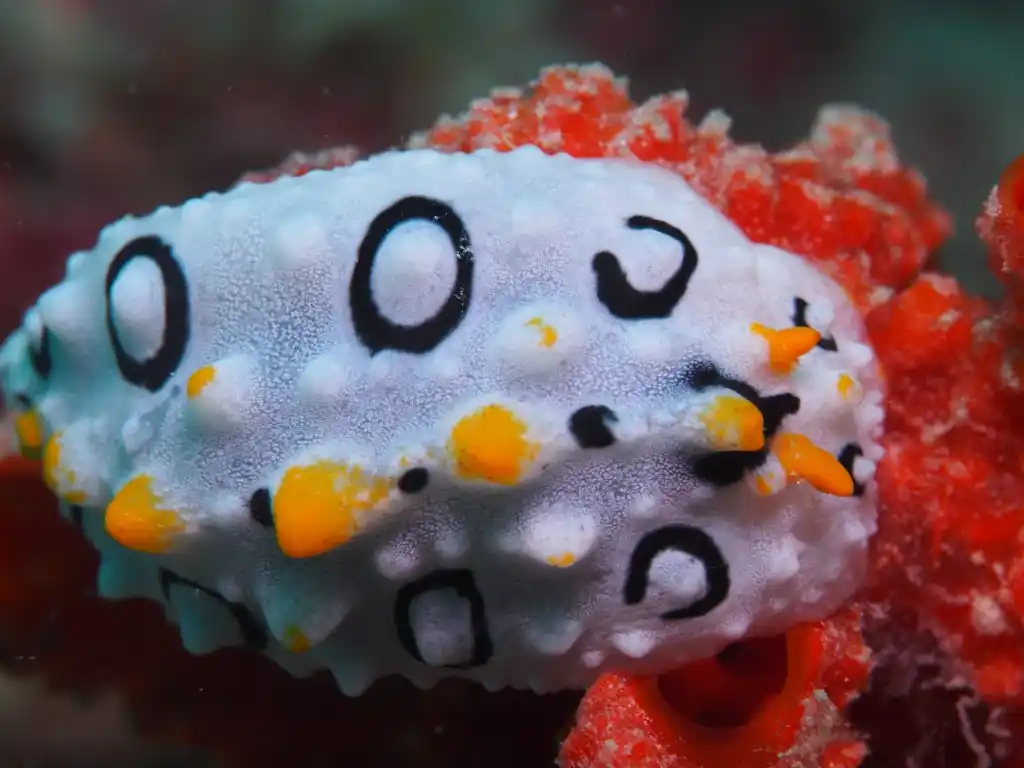
Phyllidia babai: distinguished by a cream to light yellow body covered in white tubercles set within black rings, with the underside edged in bright yellow. It's one of the rarest of the six nudibranch species in the family Phyllidiidae, and easy to miss.
Sea Stars
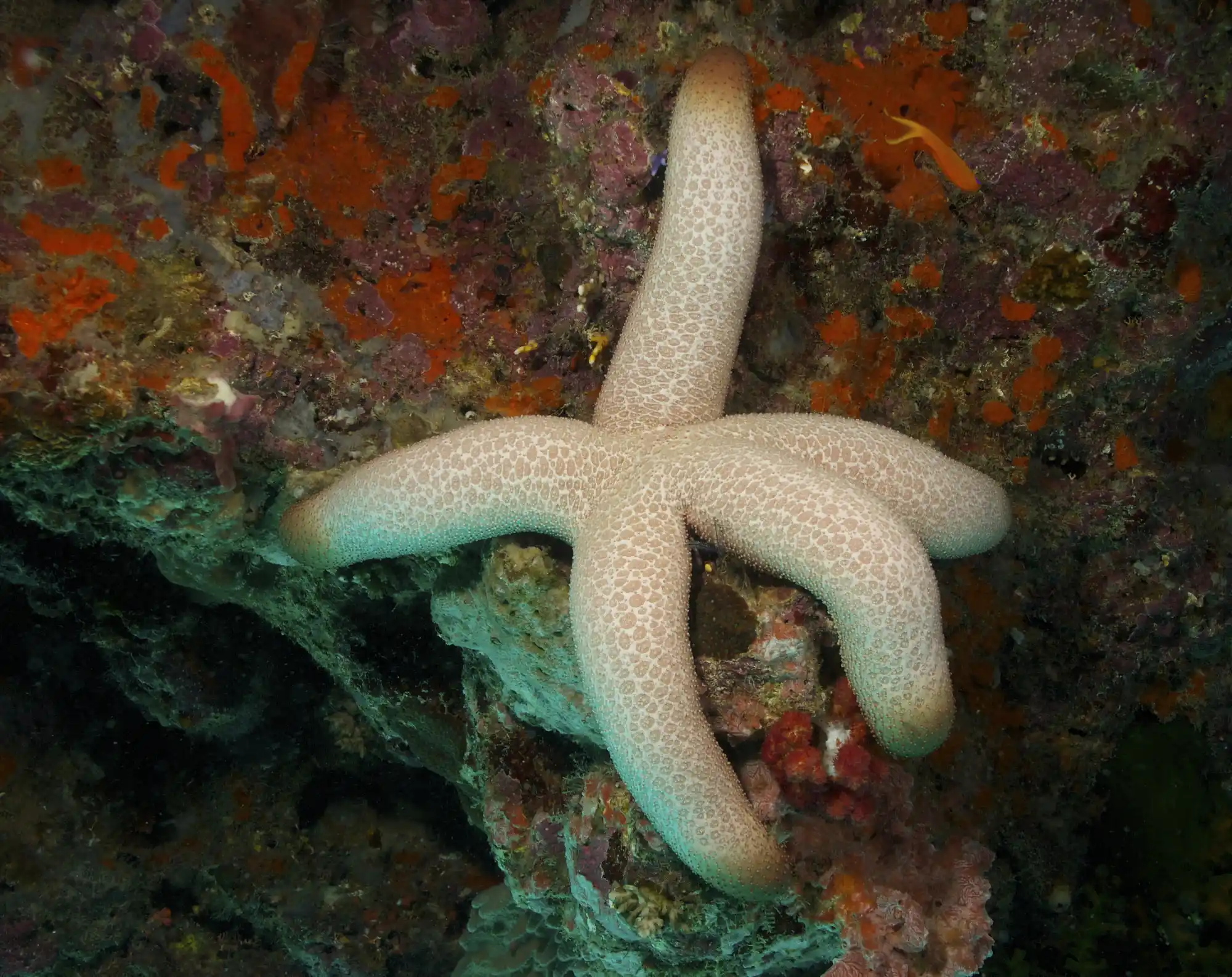
Thromidia catalai: weighing up to 6kg, this is one of the largest known sea star species, often called the heavy sea star or fat sea star. Colouring ranges from white to yellow to orange, with brown tips. It's rarely seen across its Pacific range, and its occurrence here is the first confirmed record for the Indo-Malayan Archipelago.
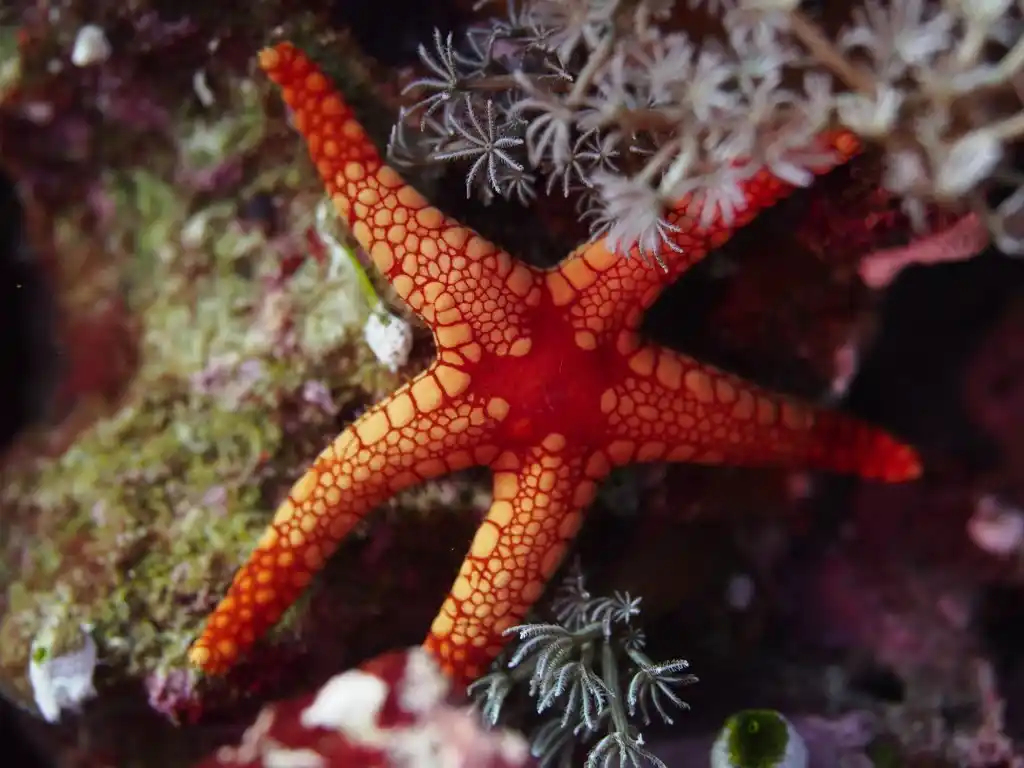
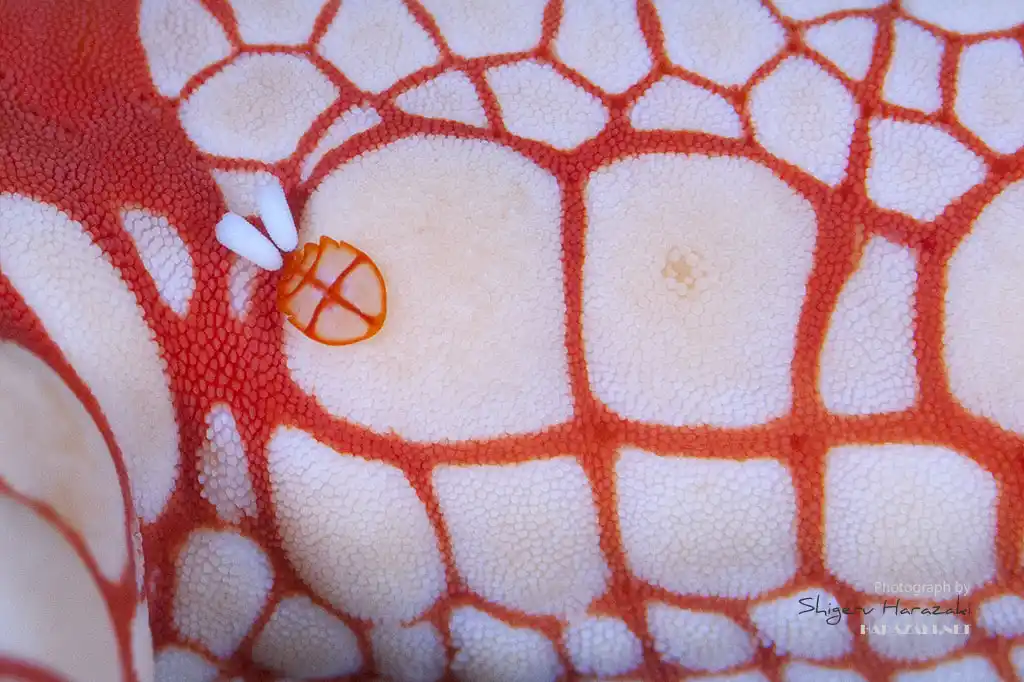
Celerina heffernani, also known as Heffernan's sea star, is a favourite among underwater photographers, who come to capture a microscopic symbiotic copepod living on its surface. Several have been recorded at Sipadan, notable since most other Indo-Pacific locations have only a single confirmed record.
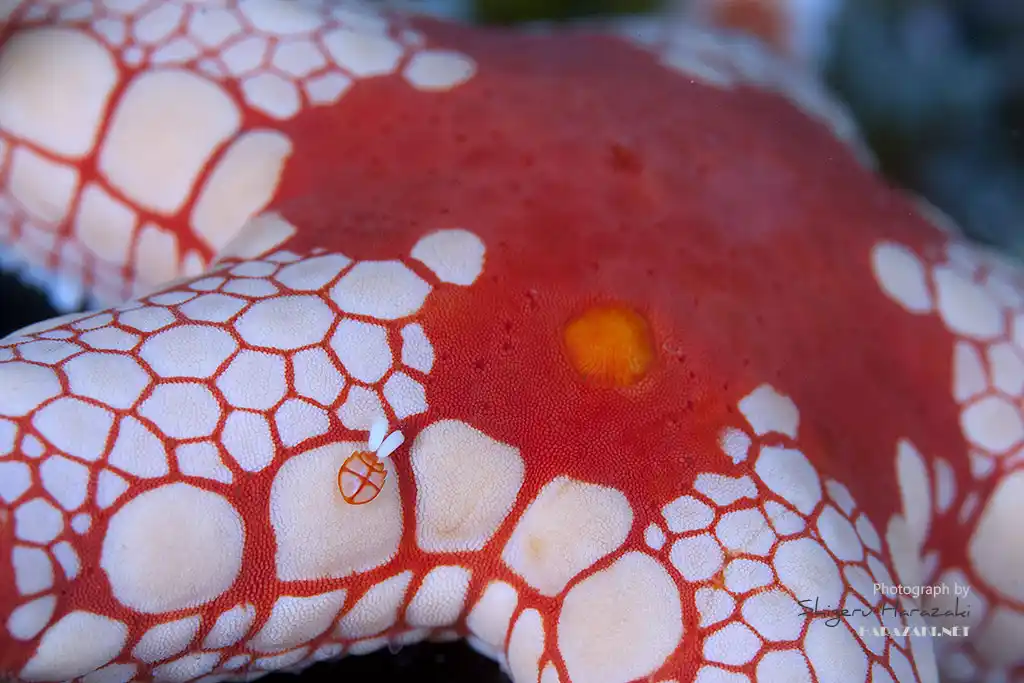
Sipadania celerina
The copepod living on that sea star is Sipadania celerina, one of the few species anywhere to carry Sipadan's name into science: its genus was coined for Pulau Sipadan, where it was first discovered, while its species name honours its host, Celerina heffernani. This tiny, parasitic crustacean carries a striking red cross on its body, which helps it blend in against its host.
Triton's Trumpet
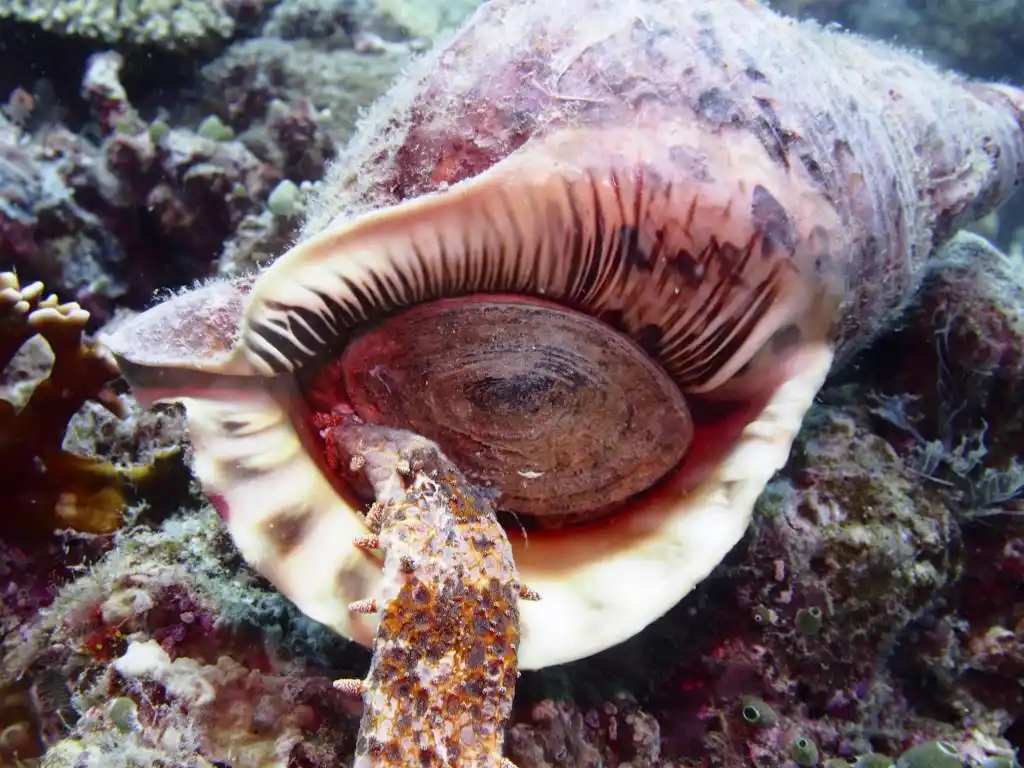
Charonia tritonis: these large marine snails are named after Triton, son of Poseidon in Greek mythology. Triton's trumpet can grow up to half a metre long and actively hunts sea stars, sawing through their tough skin with a knife-like radula. It's one of the few natural predators of the crown-of-thorns sea star, making it ecologically important in controlling outbreaks.
Sponges
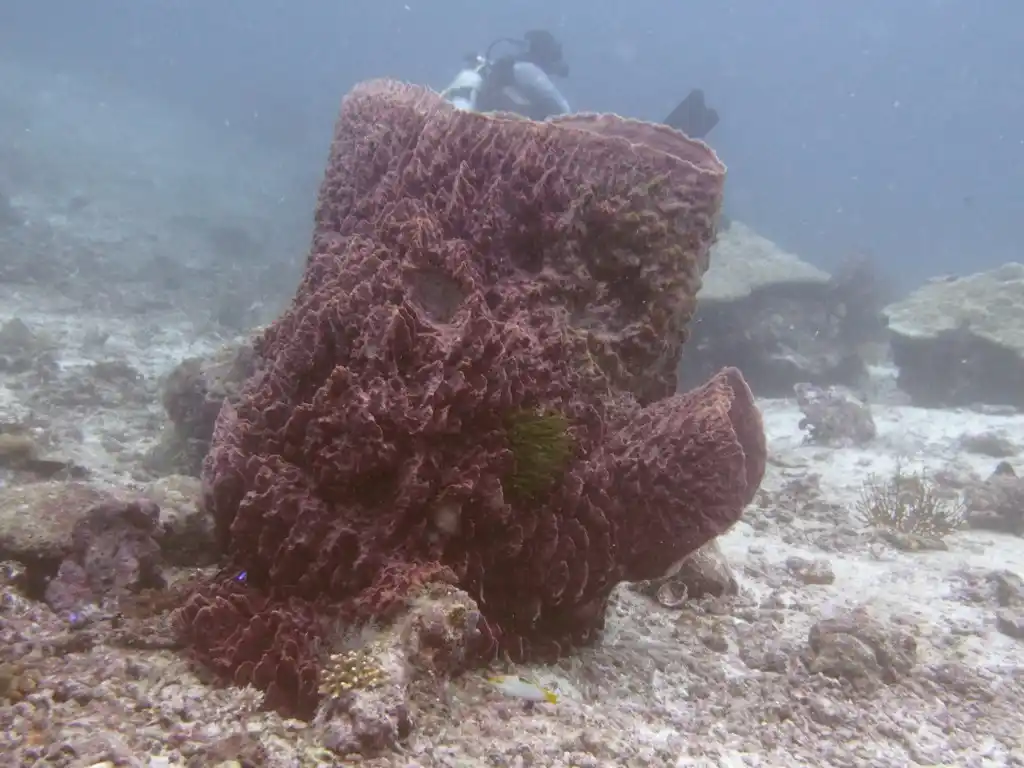
Of at least 80 distinctive macrosponges observed at Sipadan Island, only around 30 have ever been positively identified. The rest remain a mix of likely new species, new regional records and simple rarities, still unclassified. Several of the identified species also carry natural antioxidant and antimicrobial compounds, of interest well beyond the reef itself.
Thanks to Shigeru Harazaki
Our thanks to Shigeru Harazaki for sharing his images of the rarely photographed Sipadania celerina. He's a land guide on the World Heritage-listed Yakushima Island as well as a dive instructor, active with several marine and land animal societies in Japan, and keeps a substantial image collection on his website.
Thanks to Justyn Loo
Our thanks also to our friend and dive buddy Justyn Loo for letting us use some of her images here. She's a freelance marine biologist with a large collection of underwater macro photography, from common species to some of the rarest ones.
Sources
- Research conducted by Elizabeth Wood and her team in 1992 and 1994 for WWF Malaysia
- Product Division, Sabah Tourism Board