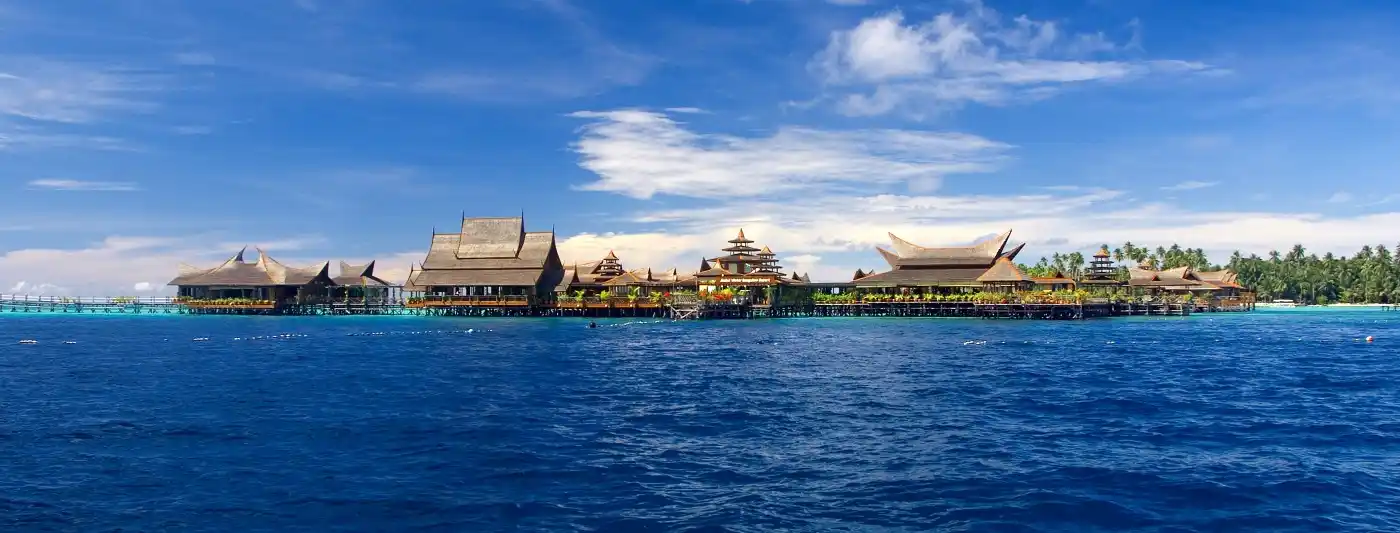
Robert Lo's Mabul Water Bungalows House Reef
How one resort owner turned a sand-bottom site damaged by fish bombing into one of Mabul's most talked-about house reefs, one structure at a time.
If house reefs are the playground of marine life, then the house reef at Mabul Water Bungalows is the Disneyland of the aquatic world.
The brainchild of resort owner Robert Lo, the house reef here is the result of years of work, dedication and, above all, patience. It started to take shape some fifteen years ago, after Lo surveyed a sand-bottom site that had been damaged by fish-bombing. “I asked myself, 'How would I be able to attract the marine life to this area and build something from nothing?'” he recalls. After studying the surrounding marine life and working out what structures would suit the reef best, Lo went to work. Fifteen years and roughly RM1,200,000 later, the Mabul Water Bungalows house reef has become a Mabul must-see for divers.

Today, the reef teems with marine life moving in and out of the belian-wood structures secured with bolt nuts, with some taking shelter in reef balls. Both soft and hard corals are slowly establishing themselves, creating a home for the wide range of species found here. Divers encounter schools of jackfish numbering in the thousands, resident giant groupers weighing anywhere from 30 to 100kg, turtles, barracuda, stingrays, crocodilefish, and bumphead parrotfish, among others. Even the orange-and-black dragonet has turned up, no small feat given it's roughly the size of a grain of rice. Lo credits part of the reef's success to a subtler trick: long rods placed around the reef that give off a low vibration, undetectable to humans but sensed by marine life. “This is a technology developed by the Japanese some years ago and has been said to even attract whale sharks,” he says.
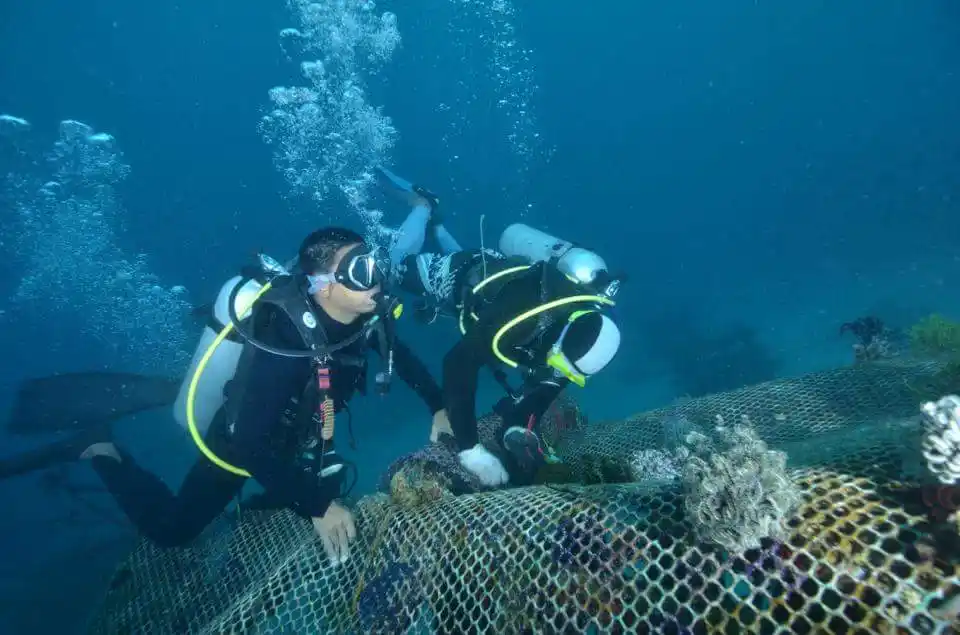
Lo describes the reef as a collective effort. “We've had a few volunteer groups contribute to the reef over the years. A group of divers from Thailand helped with construction some years back, and another group from UiTM, a local university, planted artificial seaweed and seagrass. Thanks to their generosity, the reef has become what it is today,” he says. The local community plays a part too, and benefits from it: village residents are paid RM15 for each cubicle they build, used to construct the artificial reef structures.
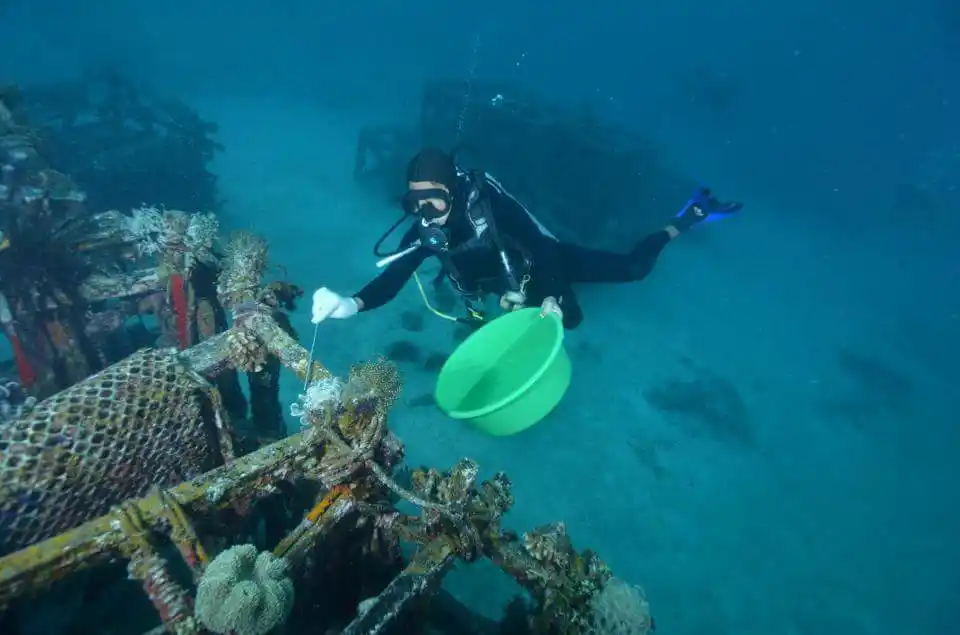
Like any success story, the reef has its share of ongoing challenges. “We do regular weekly rubbish clean-ups. The resort practices responsible waste disposal, but the tide brings in rubbish from other areas, and cleaning up is the only real solution we have right now. I think this can be minimised, if not solved, through education. Local residents need to know about proper disposal and the consequences of throwing rubbish into the sea,” Lo says. Manpower is another constraint: “Currently I rely on the divemasters to help, and their only free time is between dives or on days off. I don't want to exhaust my staff or risk their safety, so we don't always get to work on the reef as often as we'd like.”
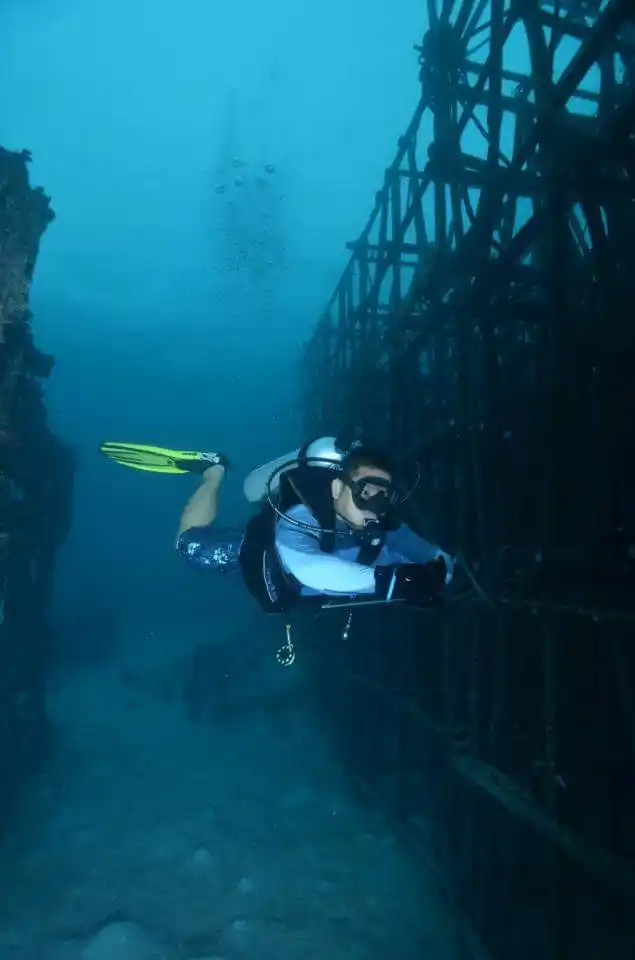
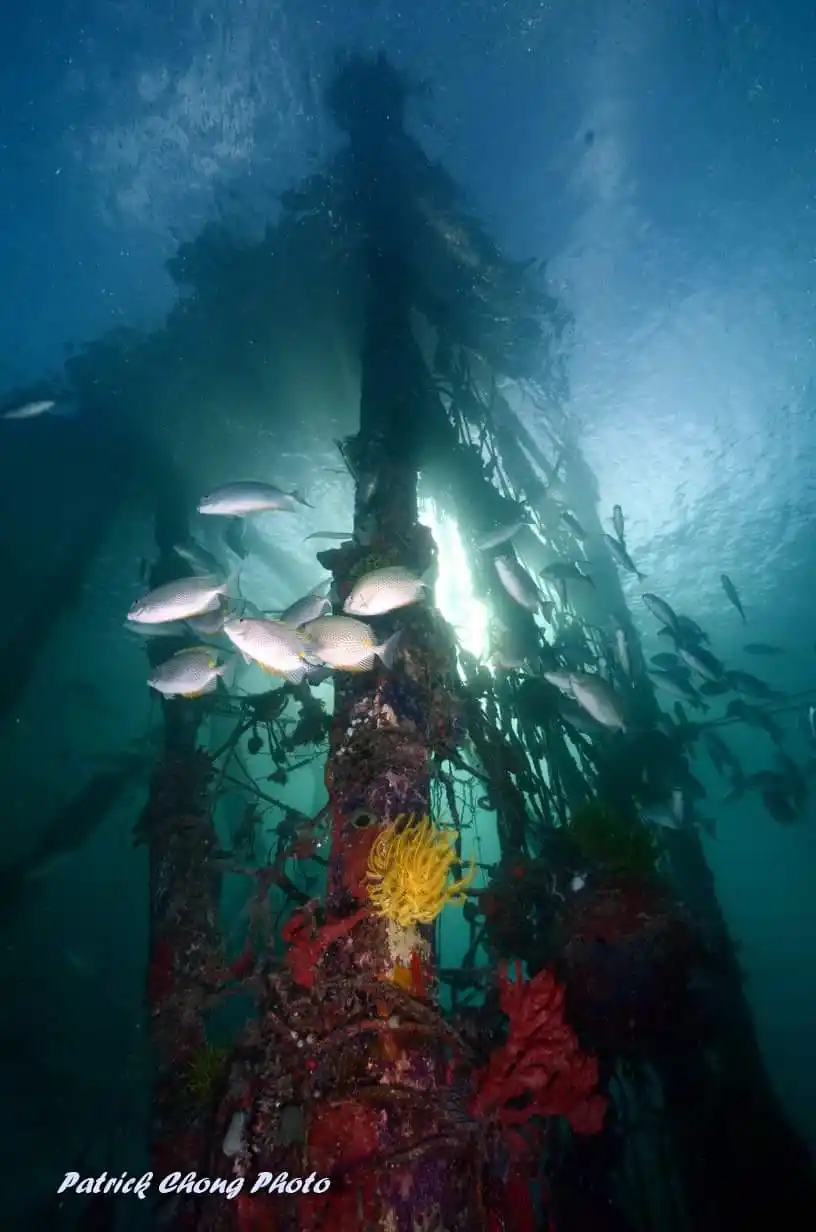
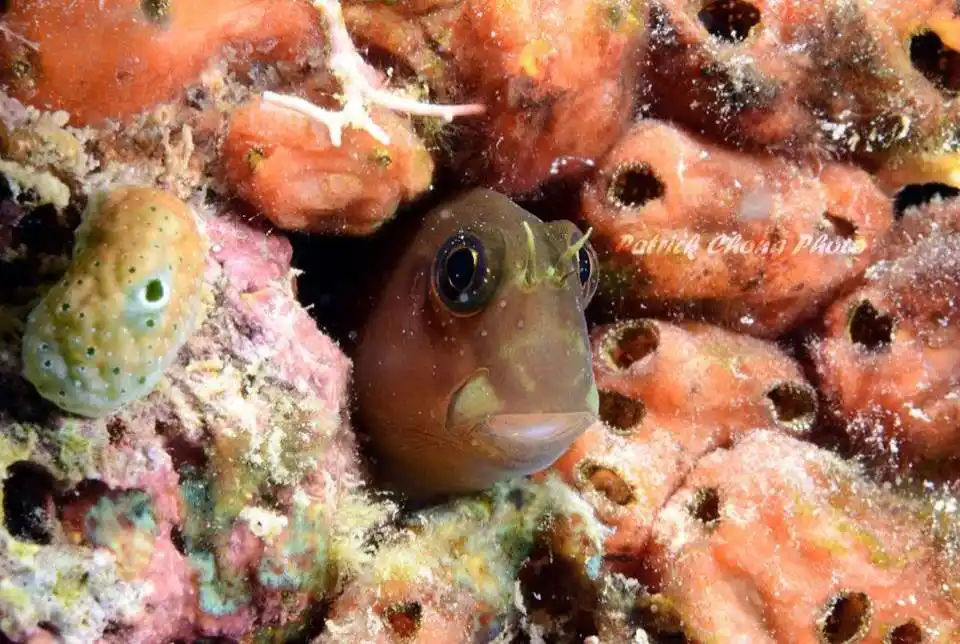
Lo has plans to expand the reef further, including using statues instead of the standard pyramids and cubes to give corals a base to form on while making the reef more visually interesting. Mabul Marine Week, an annual event, continues to bring in participants to clean up the reef, plant coral, and learn about the surrounding marine environment. Over the years, Robert Lo has shown that with enough determination, passion and a bit of vision, it's possible to build something out of what was once nothing.