Two Worlds, One Island: The Complete Diver's Guide to Ambon
Inside a single island: the world's most productive muck diving in Ambon Bay, and ancient coral walls on outer coasts that most visitors never reach.
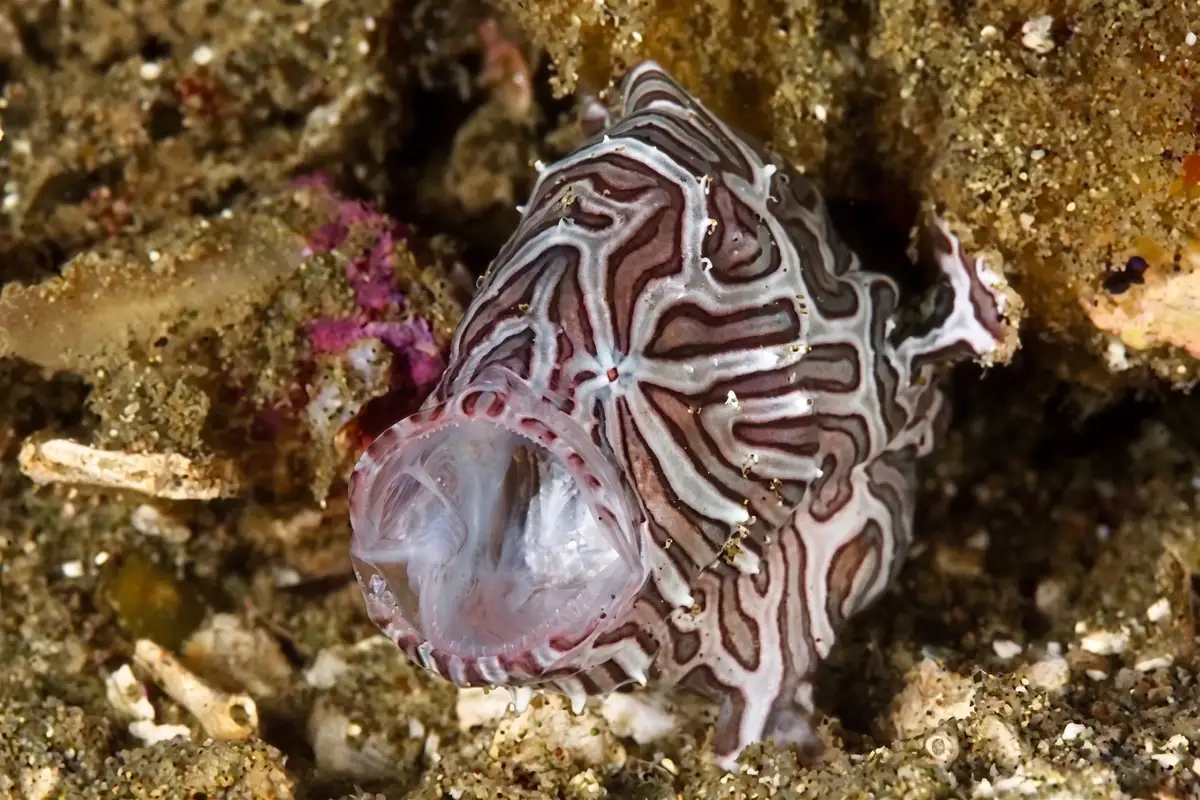
Ambon sits squarely in the Coral Triangle, yet it escapes the heavy footfall of the standard Indonesian dive circuit. In 1863, Dutch ichthyologist Pieter Bleeker documented 783 species of fish in Ambon Bay alone. That historical baseline holds. The bay today remains one of the most species-dense bodies of water in the world, home to rare endemics found nowhere else on Earth — including the psychedelic frogfish, whose scientific name honours the island itself. But Ambon is not simply a muck destination. The island contains two entirely distinct diving worlds within its coastline, and understanding both is the difference between a good dive trip and a genuinely exceptional one.
At a Glance
| Best time to visit | October to April (dry season) |
| Wet season | Ambon Bay muck sites remain open year-round |
| Water temperature | 26°C - 30°C year-round |
| Skill level | All levels in the bay; Advanced OW minimum for outer coasts |
| Getting there | Fly via Makassar or Surabaya to Pattimura Airport (AMQ) |
Two Environments, One Island
The key to understanding Ambon is its geography. Ambon Bay cuts deep into the western side of the island, divided by the Sill of Ambon — a shallow channel just 12 metres deep and 800 metres wide — into a sheltered inner basin (maximum 40 metres deep) and a deeper outer bay that descends to 600 metres. The sill traps nutrients and silt inside the inner basin, creating precisely the conditions that make Ambon Bay one of the world's premier muck diving destinations. Step outside the bay to the southern and eastern coasts, and the water clears entirely. The volcanic topography shifts to sheer walls, deep canyons, and massive underwater arches. These are separate experiences requiring separate planning, and visiting Ambon without accessing both means leaving half the destination unexplored.
Ambon Bay: The Muck Capital
The inner bay is defined by long, gentle slopes of black and grey volcanic sand, coral rubble, and anthropogenic debris — discarded glass, old rope, fishing waste — that inadvertently creates dense shelter for the rarest critters in the Maluku Sea.
At the northern shoreline near the airport, the Laha reefs and the Twilight Zone are the gateway sites for most visiting divers. The substrate here is dark volcanic sand and jetty rubble. Dusk dives at Laha are particularly rewarding: this is one of the most reliable spots in the region for the mandarinfish mating dance, a brief twilight spectacle in which males compete aggressively before pairing off to spawn. The dark sand at the Twilight Zone isolates even the most cryptic subjects with unusual clarity — hairy frogfish, mimic octopuses, bumblebee shrimps, and poison ocellate octopuses are all resident here.
Further into the bay, Rhino City and Tanjung Nama offer a cleaner variant of muck diving. The substrate shifts to finer volcanic sand, with vast fields of elephant ear sponges forming the dominant seascape. These are the prime sites for Rhinopias — the paddleflap and weedy scorpionfish — alongside flamboyant cuttlefish and the full range of Ambon's cephalopods, including the mimic and wonderpus octopuses. Ornate ghost pipefish and pygmy seahorses are encountered regularly. The psychedelic frogfish, endemic to these waters, is most reliably found in this zone.
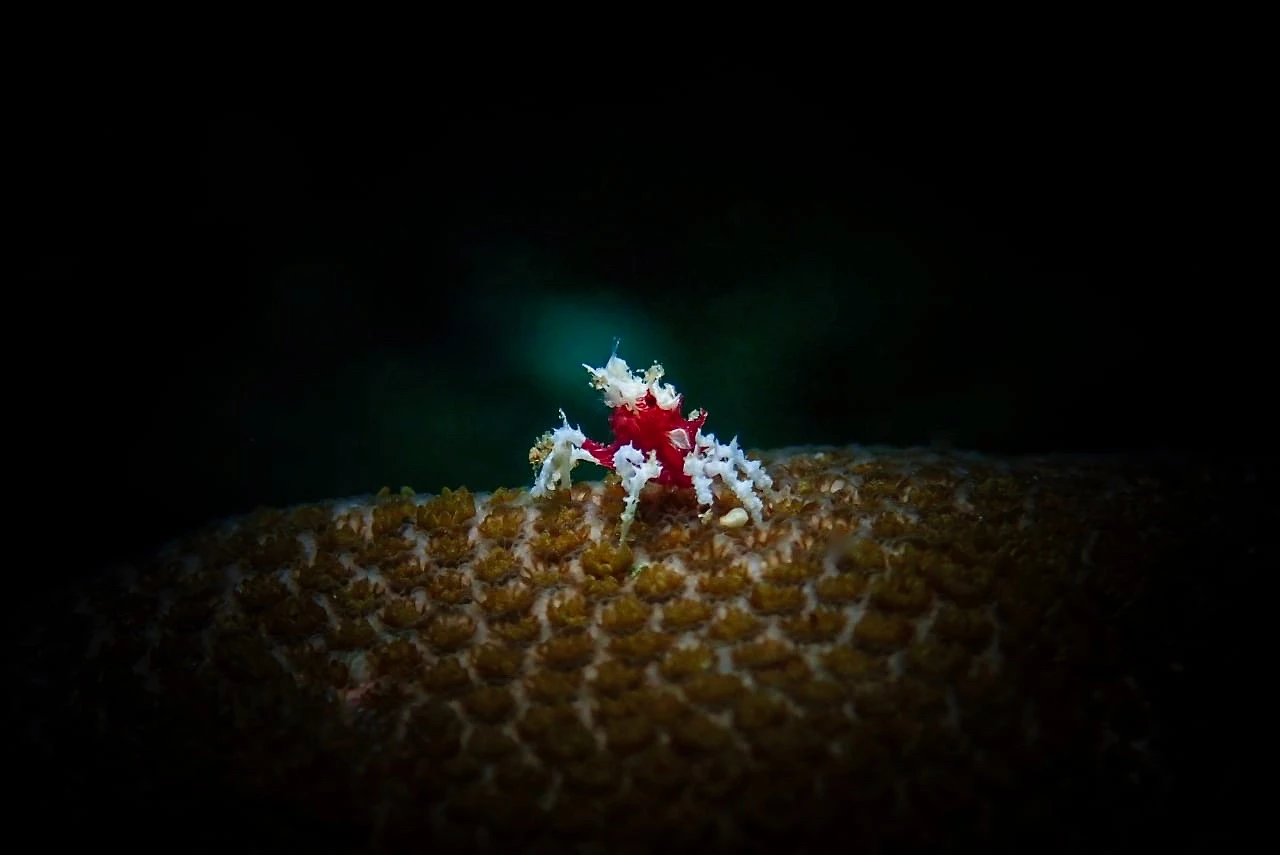
Within the same sheltered bay, the SS Aquila — also known as the Duke of Sparta — provides a reason to look up from the sand. The wreck rests between 15 and 35 metres, its structure now entirely encrusted in soft corals and inhabited by a dense population of reef fish. It is the one site in Ambon Bay where the muck gives way to something larger in scale and suited to wide-angle exploration.
The Southern and Eastern Coasts: Clear Water Diving
The outer coasts are a complete contrast. Visibility here regularly exceeds 20 metres, the topography is geological in scale, and the marine life shifts toward the pelagic. Bumphead parrotfish, Napoleon wrasse, and large reef fish aggregations move along walls draped in gorgonian sea fans and giant barrel sponges.
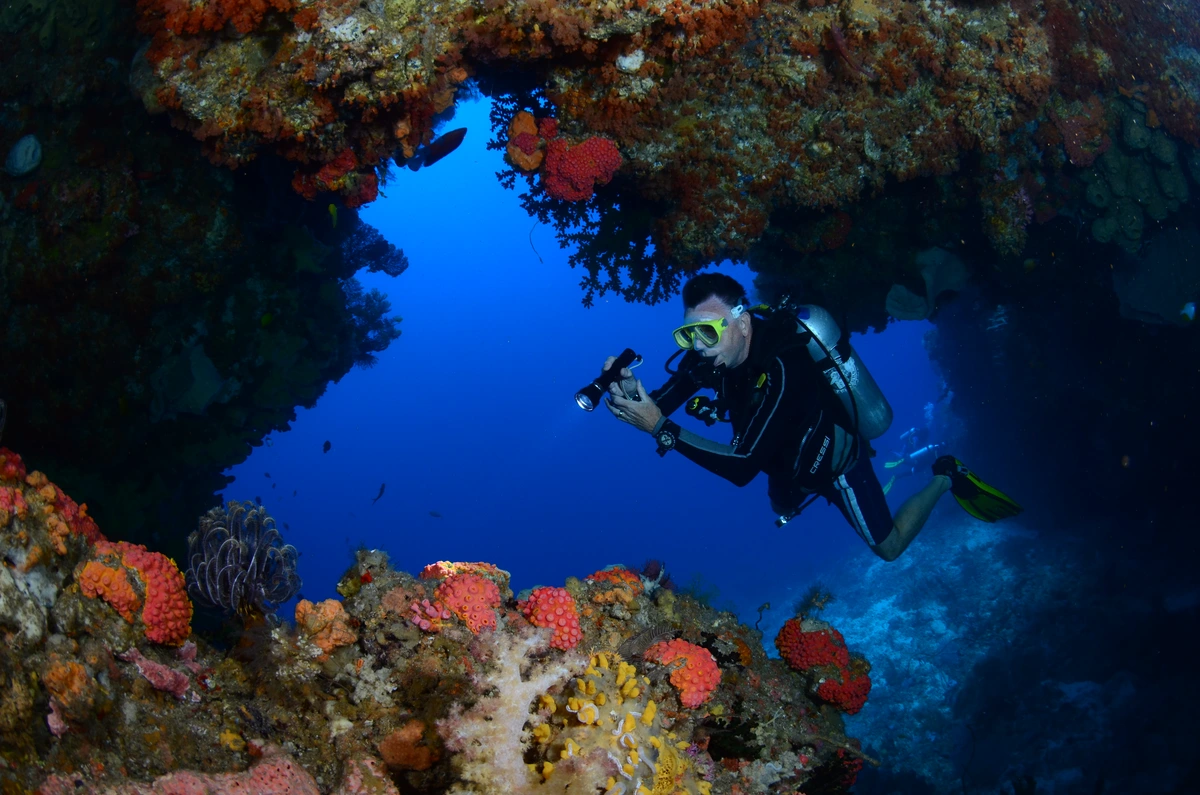
Hukurila Cave, on the Leitimur Peninsula, is the signature site of the southern coast. A series of crevasses and canyons leads through to three wide underwater arches, each flooded with ambient light filtering from above. The dive moves through these formations at around 20 metres, with coral-encrusted walls and schooling fish in every direction. The cave is also home to flashlight fish (Photoblepharon bandanensis), a species that carries bioluminescent bacteria beneath each eye. Kill your torch inside the cave and the darkness fills with drifting points of cold blue-green light — an experience found in very few dive destinations anywhere in the world. It is an architectural, almost meditative dive by day, and something else entirely after dark.
Pintu Kota — Indonesian for “city gate” — is named for its massive archways, which rise to approximately 17 metres in height. The site sits about an hour from Ambon Bay and rewards the transit. Visibility is excellent, the current is manageable, and the scale of the formations is striking. Puffer fish, moray eels, parrotfish, snapper, trevally, and sweetlips are regularly encountered along the archway walls.
Hard Boiled, off the coast of Haruku Island in the Haruku Strait, is a novelty site with genuine geological interest. Hydrothermal vents heat the sand and the surrounding water column; dive guides here have long demonstrated this by cooking eggs directly on the seabed. The current through the strait can be significant, making this a site suited to more experienced divers.
Baguala Bay: The Third Dimension
Baguala Bay occupies the southeastern side of the island, separated from Ambon Bay by a narrow isthmus. The diving here sits between the two other environments in character: clean sand shallows drop into clear water, leading to sea mounds and walls covered in vibrant hard and soft corals. Large schools of barracuda and trevally are common, and the site offers wide-angle coral diving in conditions considerably cleaner than anything inside the main bay. For divers combining a resort stay with broader exploration, Baguala Bay adds a genuinely different register to the itinerary.
When to Visit
The Moluccas operate on a reversed monsoon cycle compared to the rest of Indonesia, and this is the single most important planning consideration for an Ambon trip.
The dry season runs from October to April. During this window, seas are calm, visibility across all sites is at its highest, and the full range of Ambon's diving is accessible — inner bay muck, southern arches, and the clear-water walls of the outer coasts. October to January is the peak period; the destination sees increased traffic around Chinese New Year in February and again in April.
The wet season, from May to October, does not close Ambon entirely. The inner bay remains sheltered and diveable year-round — the macro residents are permanent, and conditions inside the bay are largely unaffected by seasonal swell. If muck diving is the sole focus, the wet season is a viable and quieter option. The outer coasts, however, become inaccessible: the southern and eastern sites are exposed to the full force of the Southeast Monsoon, and most operators do not attempt them during this period.
Water temperature stays between 26°C and 30°C year-round, with no significant variation between seasons.
Getting There
Ambon is served by Pattimura International Airport (AMQ), located along the northern shoreline of Ambon Bay near the Laha dive sites. Domestic connections from Makassar (Ujung Pandang) and Surabaya provide the main access routes; both cities connect to major international hubs including Singapore and Kuala Lumpur. Flight time from Makassar is approximately one hour.
Planning Your Stay
Most dive operators are concentrated in the north of the island, with direct access to the Ambon Bay muck sites as their home territory. Day-trip transfers to the southern and eastern coasts are offered by most operators, making it practical to run morning dives in the bay and an afternoon transit to the outer sites without changing accommodation. A week gives enough time to work through the main bay sites and reach Hukurila Cave and Pintu Kota on the outer coast — less than that, and the southern sites tend to get cut. If covering both environments is a priority, it is worth factoring the outer coast into your resort choice rather than leaving it as an afterthought — the resorts we work with in Ambon vary in how readily they run the southern day trips.